Hints & Tips
Why Stair Protection Matters On Busy Construction Projects
May 28, 2026
Finished stairs are one of the most vulnerable surfaces on any active construction project. Whether they’re hardwood, polished concrete, finished stone, or carpeted, stairs experience constant foot traffic from crews carrying tools, materials, and equipment between floors every day.
Because stair systems are often completed early in the project timeline, they can remain exposed to ongoing construction activity for weeks or even months before final turnover. Without the right temporary surface protection in place, finished stairs can quickly suffer from scratches, chips, stains, cracked nosing, and premature wear.
The result is often expensive repairs, unnecessary punch list items, project delays, and safety concerns that could have been avoided with proper protection upfront.
Fortunately, protecting finished stairs doesn’t need to be complicated or expensive. With our purpose-built stair protection solutions, contractors can defend vulnerable surfaces and improve jobsite safety to keep projects moving efficiently from start to finish.
Why Stair Protection Is So Important
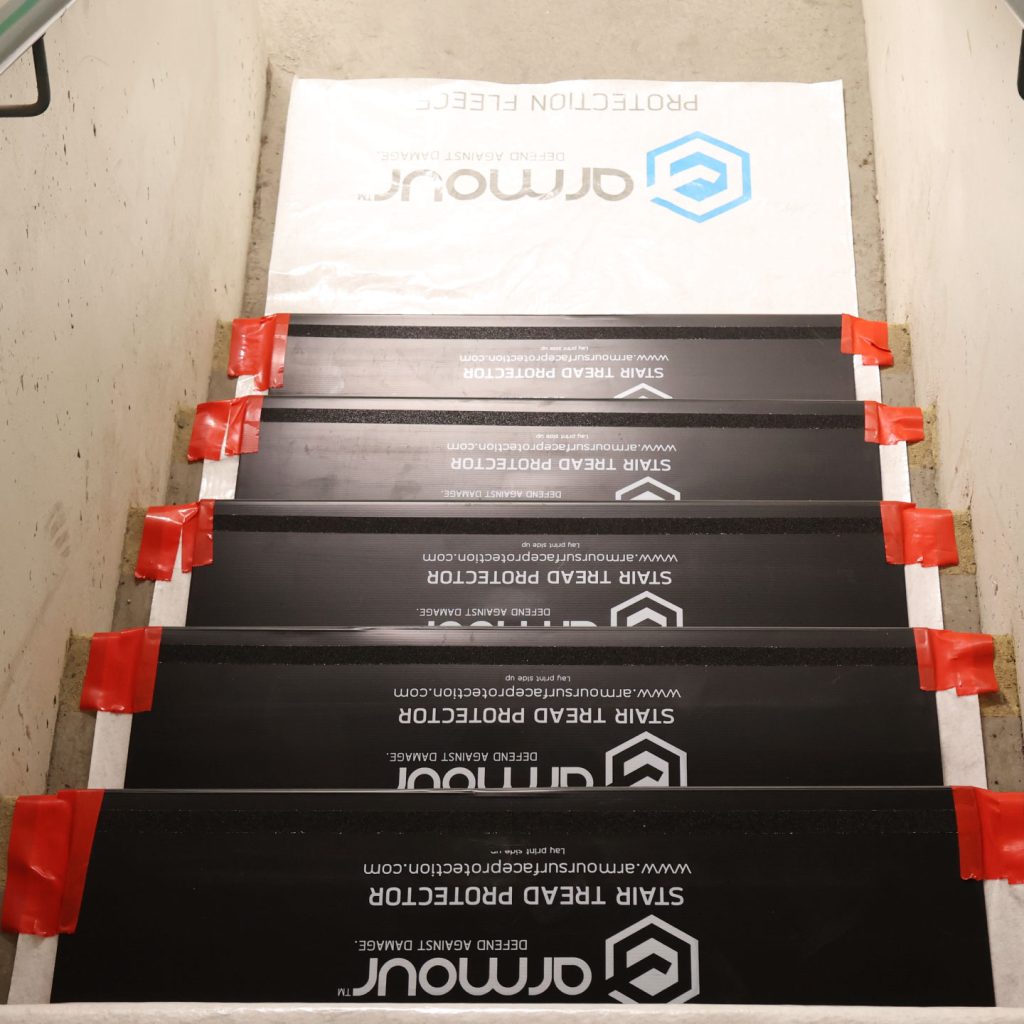
Stairs are naturally one of the highest-traffic areas on any construction site. On many projects, they become the primary access route between floors for multiple trades throughout the day. That constant movement puts finished stair surfaces at serious risk.
Wood stairs can become scratched and scuffed. Finished concrete or stone stairs may chip or crack along edges and nosing. Carpeted stairs can quickly become stained, dirty, or worn down from repeated foot traffic and tracked-in debris.
Beyond surface damage, unprotected stairs can also create safety issues. Dust, mud, moisture, and loose coverings can increase slipping hazards and make stairways more dangerous for crews navigating busy jobsites.
At the same time, damaged stairs can negatively impact project timelines and budgets. Repair work, refinishing, and replacements often add unnecessary costs while creating avoidable delays near project completion.
That’s why purpose-built stair protection has become an essential part of maintaining efficient, professional, and inspection-ready jobsites.
Full Stair Protection For Hard Surface Stairs
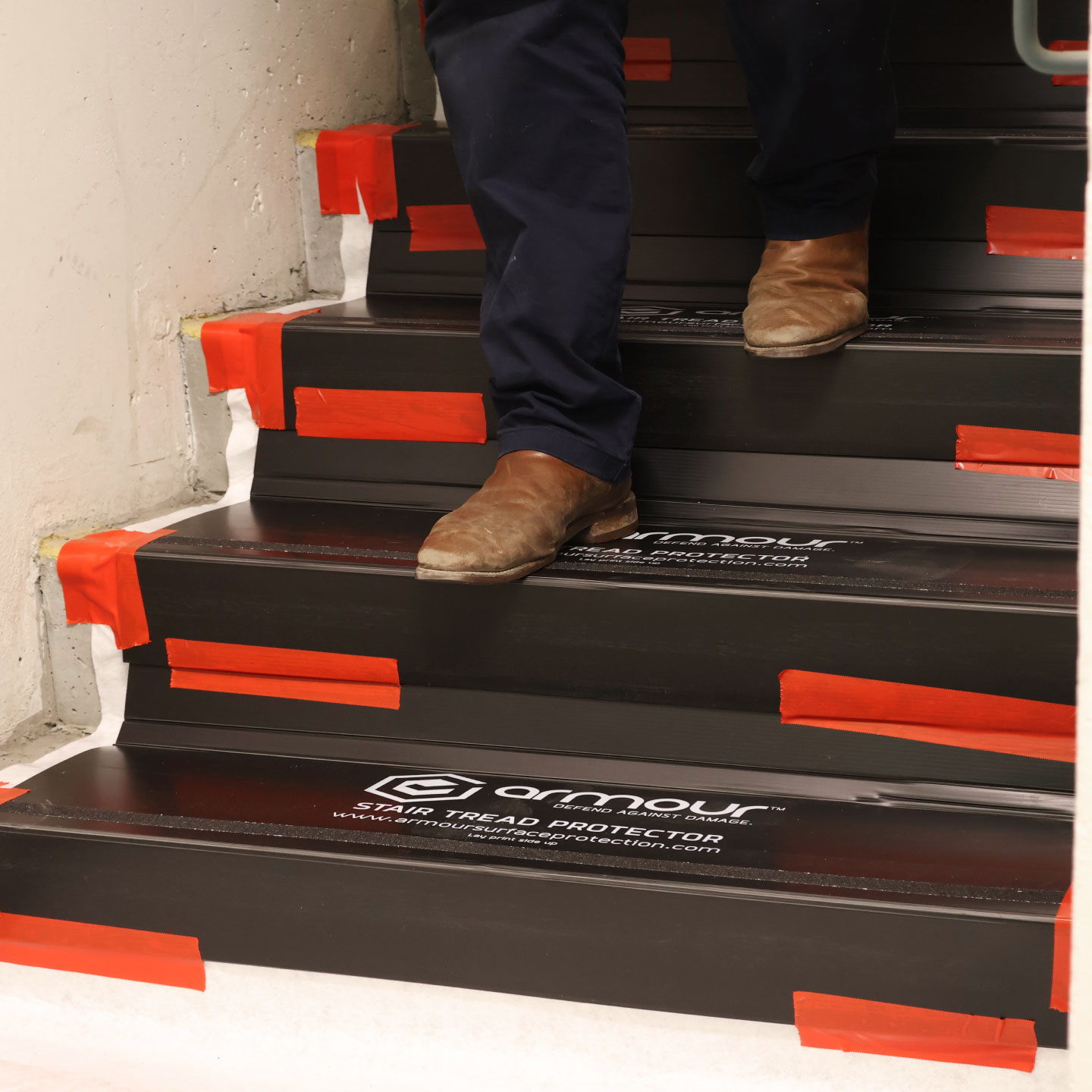
For finished wood, concrete, stone, or composite stairs, the right protection solution needs to do more than simply cover the tread surface. It should help protect the entire stair system, including the tread, riser, and stair nosing, while also providing reliable traction for crews onsite.
That’s where products like the Armour Stair Tread Protector come into play.
Designed specifically for active construction environments, the protector helps defend finished stairs against impacts, debris, and repeated wear from ongoing traffic. Unlike makeshift solutions that shift, curl, or leave exposed areas behind, the preformed lip on either side allows for complete stair protection in one product.
Grip tape on each tread helps improve traction during construction activity, which helps ensure safety on jobsites where crews are tracking in dust, mud, or moisture throughout the day.
Another major advantage is efficiency. Because the protectors are purpose-built for stairs, installation is fast and straightforward. Contractors can spend less time cutting, adjusting, and taping generic materials into place while still achieving professional-grade protection.
Most importantly, stair protection remains far more affordable than repairing or refinishing damaged finished surfaces later in the project.
For an extra layer of protection, add Armour Protection Fleece underneath to not only provide a non-abrasive barrier but provide a surface to stick tape to, preventing tape residue and scratches to high-value stairs.
Protecting Carpeted Stairs During Construction
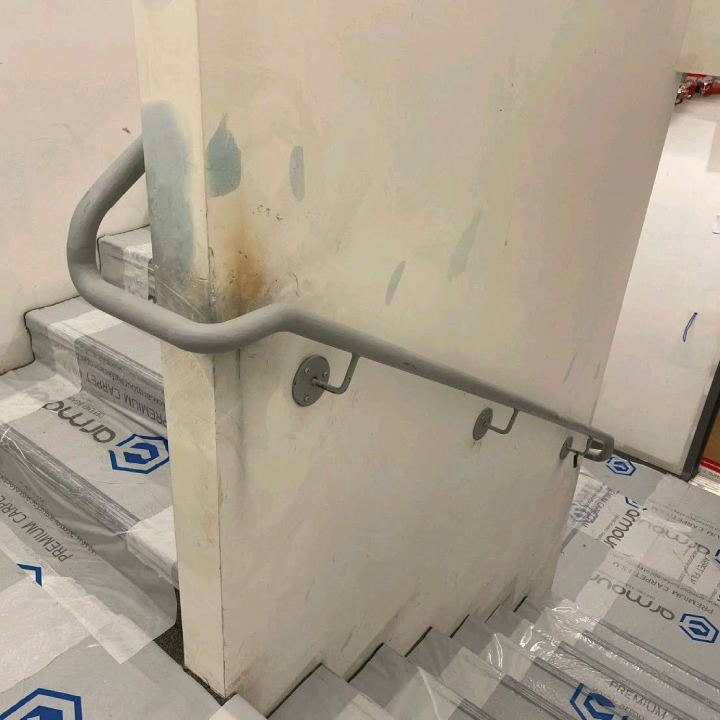
Carpeted stairs require a slightly different protection approach. While impact resistance still matters, the main goal is often preventing dirt, dust, spills, and moisture from damaging the finished carpet underneath.
Temporary carpet protection solutions help preserve the appearance and condition of finished carpet while still allowing crews to move safely throughout the site.
In particular, Armour Premium Carpet Film can help defend against tracked-in debris, construction dust, moisture contamination, and premature wear caused by repeated traffic during active construction.
For even more security, pair the film with the aforementioned Armour Stair Tread Protector for complete moisture and impact protection while eliminating the need to tape the tread protectors directly to the carpet itself.
Safety + Professionalism Go Together
Protecting finished stairs isn’t only about preventing cosmetic damage. It also plays a major role in supporting overall jobsite safety and organization.
Proper stair protection helps provide a more stable and reliable walking surface for crews moving between levels throughout the day. Solutions designed specifically for stairs help reduce slipping and tripping hazards while keeping stairways cleaner and easier to navigate.
At the same time, clean and well-protected stairs contribute to a more professional-looking jobsite overall. When clients, inspectors, or project stakeholders walk through a site, damaged or dirty stairs can quickly stand out for the wrong reasons.
Purpose-built stair protection helps contractors maintain a cleaner, more organized environment while reducing avoidable deficiencies and rework near project completion.
Conclusion: Protect Finished Stairs Before Damage Happens
Whether you’re protecting finished wood stairs, polished concrete stairways, or carpeted access routes, temporary stair protection is one of the simplest and most effective ways to reduce risk during construction.
Purpose-built stair protection solutions help contractors minimize damage, improve safety, reduce punch list items, and maintain smoother workflows throughout the project lifecycle.
And in the end, protecting stairs early is almost always faster, easier, and more affordable than repairing them later.
- Phone: 1-866-617-8502
- Email: sales@axiomtsp.com
- Get a Quote: Request a Quote
- Order Free Samples: Request Samples