Hints & Tips
How To Defend High-Risk Zones On Busy Jobsites
April 30, 2026
On any active jobsite, some areas carry more risk than others. High-traffic corridors, staging zones, and access routes for lifts and carts are constantly exposed to movement, pressure, and impact. These are the spaces where heavy equipment and finished surfaces meet, and where damage is most likely to occur.
Without the right protection in place, these zones quickly become the source of scratches, dents, and delays that show up later as punch list items and costly rework. If heavy equipment is moving through a space, that space needs more than a basic layer of coverage. It needs protection designed to handle impact, traffic, and time.
What Makes A Zone High-Risk?
Not all areas on a jobsite face the same level of exposure. High-risk zones are defined by constant activity and repeated use. Equipment moves through them continuously, often along the same paths, increasing wear on surfaces below. Tight access points add another layer of risk, where even small miscalculations can lead to collisions with walls, columns, or finished edges.
These zones are often located near surfaces that are already completed or close to it, which raises the stakes even further. When activity continues over extended timelines, the likelihood of damage increases with every passing day. This combination of pressure, repetition, and proximity makes high-risk zones one of the most common sources of jobsite deficiencies.
The Cost Of Getting It Wrong
Damage in these areas rarely stays isolated. A single issue can create a ripple effect across the project, leading to repairs, delays, and added coordination between trades. Time is lost revisiting work that should have been completed, and budgets take a hit from avoidable fixes.
When protection is overlooked or under-specified, teams often find themselves reacting instead of staying ahead. On the other hand, a proactive approach helps reduce deficiencies, streamline cleanup, and keep projects moving without interruption. The difference comes down to planning ahead and using the right materials from the start.
What Effective Protection Looks Like In High-Risk Areas
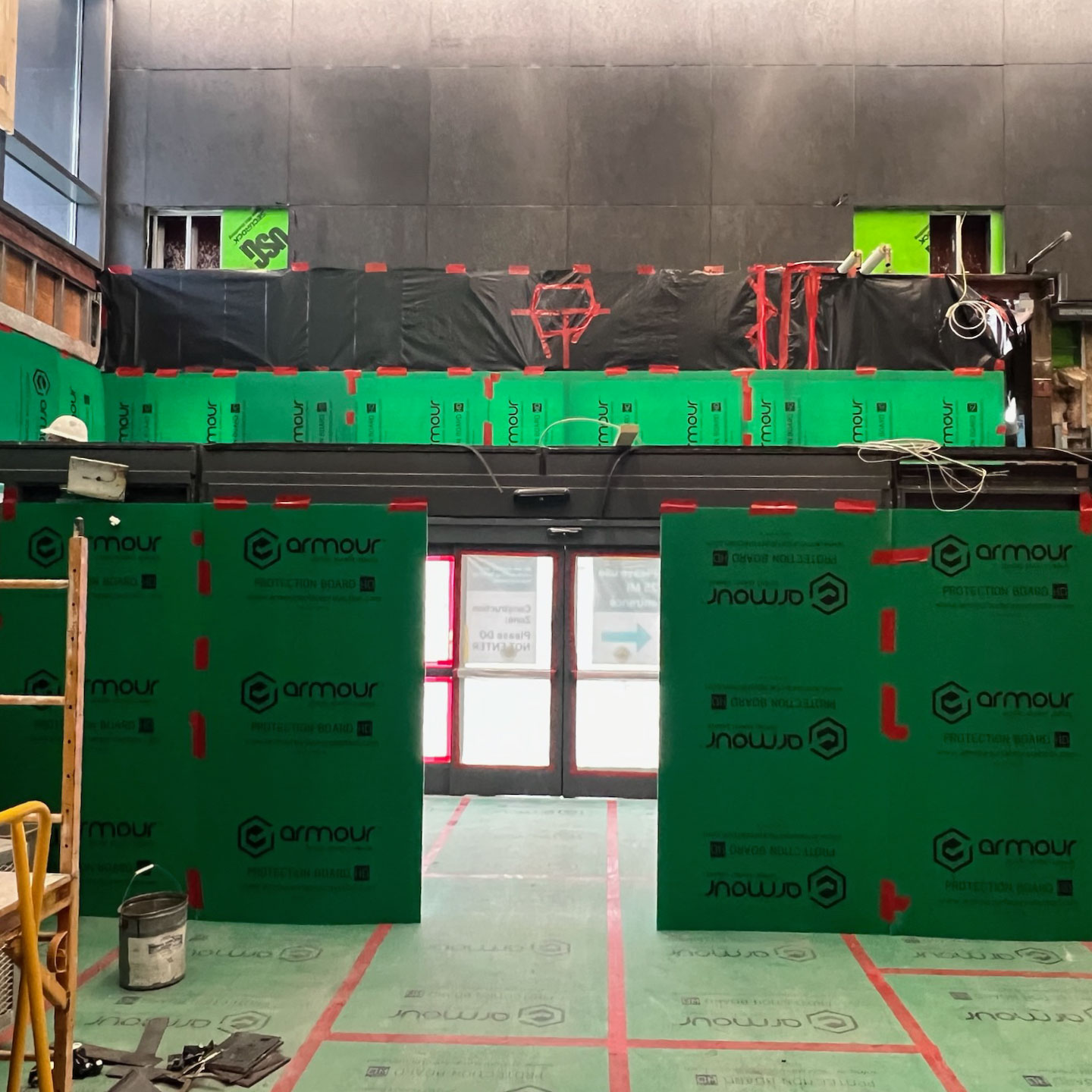
Protecting these environments requires more than a quick solution. The right system needs to handle repeated impact while still protecting the finish underneath. It should stay in place under constant traffic, install quickly without slowing the job down, and perform reliably over the full duration of the project.
Traditional materials like plywood often fall short in these conditions. They can shift under movement, absorb moisture, and even contribute to surface damage rather than prevent it. Purpose-built protection is designed to eliminate these risks while improving efficiency on site.
Heavy-Duty Floor Protection That Handles Impact
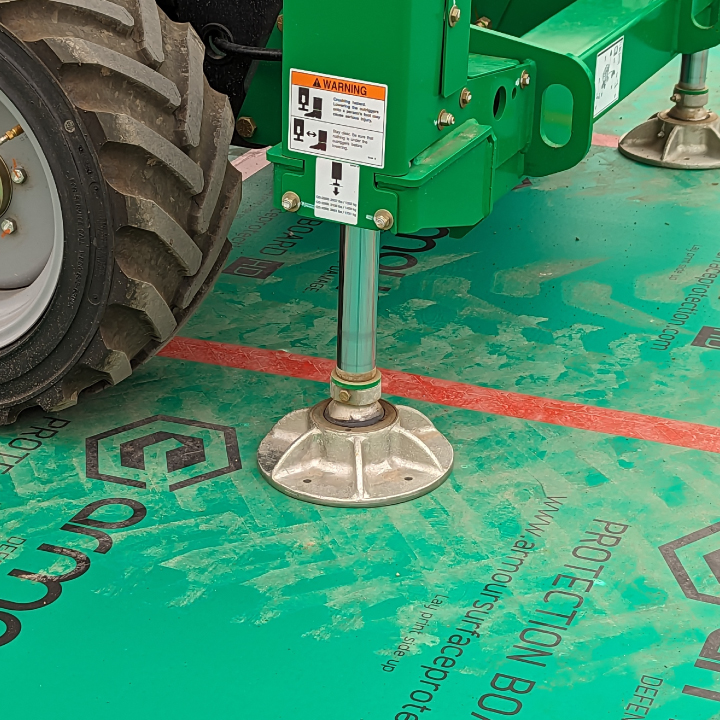
In high-risk zones, floors take the brunt of the impact. That’s where Armour Protection Board – Green HD stands out. Built with a high-density 5mm structure and a honeycomb core, it is designed to absorb extreme force from heavy equipment and repeated traffic without breaking down.
At the same time, its fleece backing plays a critical role in protecting finished surfaces. It prevents scratches and scuffs from forming underneath, even when pressure is applied from above. This balance of strength and surface safety is what makes it effective in demanding environments.
Its waterproof and UV-resistant design allows it to perform in both interior and exterior conditions, while its lightweight and reusable nature makes it easy to install, reposition, and remove as needed. In spaces where heavy machinery is constantly moving, this level of durability helps ensure floors stay protected from major damage.
Vertical Protection For Impact-Prone Surfaces
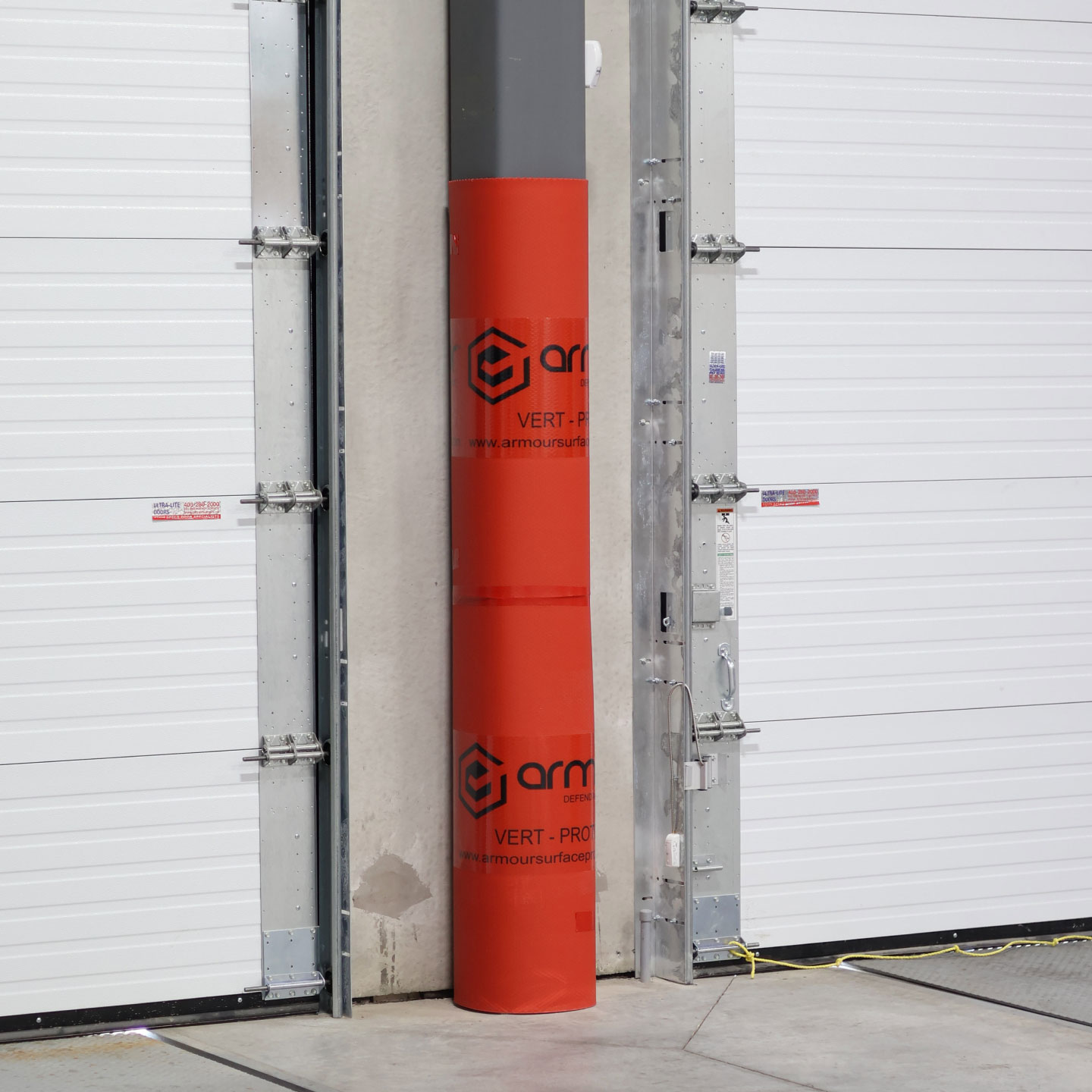
Floors are only part of the equation. In high-risk zones, vertical surfaces are just as vulnerable, especially in tight areas where equipment needs to be maneuvered carefully.
Armour Vert-Protect is designed to handle these conditions. It provides high-impact protection for walls, columns, beams, and door frames, all of which are common points of contact on busy jobsites. Its flexible structure allows it to conform to curves and irregular shapes, ensuring consistent coverage even in complex areas.
This adaptability is key in environments where movement is unpredictable. By protecting vertical surfaces alongside floors, it helps prevent the kind of visible damage that can quickly escalate into rework and delays.
Why A System Approach Works Best
The most effective protection strategies don’t rely on a single solution. High-risk zones benefit from a combined approach that addresses both floor and vertical surfaces at the same time.
When these systems work together, they create a more controlled environment. Equipment can move more freely without increasing the risk of damage, and surfaces remain protected from multiple angles. This reduces the likelihood of issues across different trades and keeps workflows running more smoothly.
Instead of reacting to damage after it happens, a system approach helps prevent it from happening in the first place.
Conclusion: Protect the Risk Before It Becomes a Cost
High-risk zones are where the most pressure is placed on both surfaces and schedules. They are also where the greatest opportunity exists to prevent damage before it happens.
With the right approach, these areas can be controlled instead of unpredictable. Armour Protection Board – Green HD provides the strength needed to handle heavy equipment on floors, while Armour Vert-Protect ensures vertical surfaces are protected from impact. Together, they create a system that keeps projects moving forward without unnecessary setbacks.
On a busy jobsite, preventing damage is always more efficient than fixing it.
- Phone: 1-866-617-8502
- Email: sales@axiomtsp.com
- Get a Quote: Request a Quote
- Order Free Samples: Request Samples
Latest Posts